


Learn the difference between backup and disaster recovery, and why both matter for business continuity. Discover practical tips for recovery solutions and planning.
View More


As your business grows, so does the list of regulations, contracts, and industry standards your IT systems need to satisfy. Manufacturers face CMMC and supply-chain security requirements, financial firms face SOC 2 and data-handling rules, and almost every industry now faces some form of client-mandated security review. A clear compliance program turns that patchwork of requirements into a manageable, repeatable process.
Most compliance failures come from gaps that were never formally checked — not from sophisticated attacks. This guide breaks down the core checklist every growing business should work through, how a managed compliance program compares to handling it ad hoc, and the practical steps to build a defensible program in the next 90 days.
Compliance requirements rarely arrive all at once — they show up gradually, through a new client contract, an insurance renewal questionnaire, or an industry certification your competitors already have. Treating each one as a one-off fire drill is what leads to gaps. A standing compliance program catches those requirements before they become deadlines.
Key takeaway
A documented compliance program is what turns "we think we're covered" into something you can actually prove during an audit, a client review, or an insurance renewal.
Every compliance framework looks a little different, but almost all of them build on the same five foundations. Work through these in order:
The order most auditors expect to see these addressed in.
Inventory systems, data, and which regulations or contracts actually apply to you.
Write down the policies you already follow informally — auditors need it on paper.
Put the technical controls in place: access management, encryption, logging.
Review logs and controls on a set schedule, not only when something breaks.
Verify the program actually works — internally first, then with a third party.

Many businesses handle compliance reactively — scrambling before an audit or a client questionnaire. Here's how that compares to running it as an ongoing, managed program:

Regardless of which specific framework applies to you, these four practices show up in nearly every one:
The controls that show up in nearly every framework, ranked by priority.
Know who can reach sensitive systems, and keep a record of who actually did.
A baseline requirement in almost every framework — and one of the cheapest to fix if missing.
Most frameworks require one on paper before an incident, not drafted during one.
Keeps policies from becoming shelfware — the team knows the rules, not just IT.
A compliance program that only exists for the week of the audit isn't a compliance program — it's a fire drill.
Key insight
You don't need every framework mapped out on day one. Start with the highest-impact gaps and build from there — most businesses can have a defensible baseline in place within 90 days.
YOUR 90-DAY COMPLIANCE ROADMAP
Assess
Map systems, data, and applicable requirements.
›
Document
Write the policies you already follow informally.
›
Implement
Put the technical controls in place.
›
Review
Run an internal audit before the real one.

It depends on your industry and who you do business with — manufacturers working with defense supply chains often face CMMC, financial and professional services firms are frequently asked for SOC 2, and most industries now see client-driven security questionnaires regardless of a formal mandate. An assessment is the first step to knowing which apply to you.
Most businesses can put a defensible baseline in place within 90 days — assessment, documentation, and core technical controls. Full certification against a specific framework can take longer depending on its formal audit requirements.
It's possible in-house with the right ownership and time commitment, but many growing businesses find it faster and more consistent to work with a provider who already maintains the documentation templates and technical controls most frameworks expect.
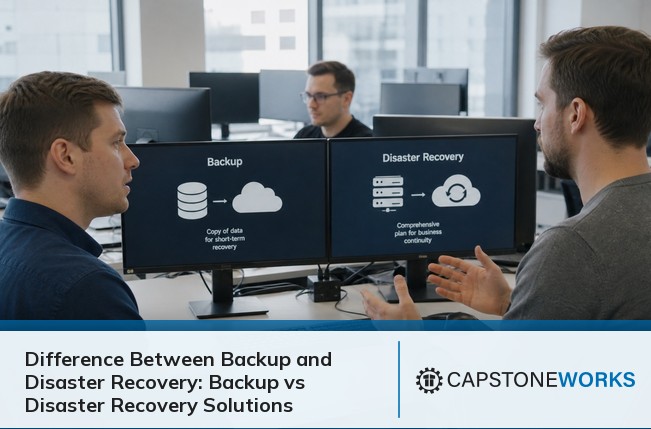
Learn the difference between backup and disaster recovery, and why both matter for business continuity. Discover practical tips for recovery solutions and planning.
View More
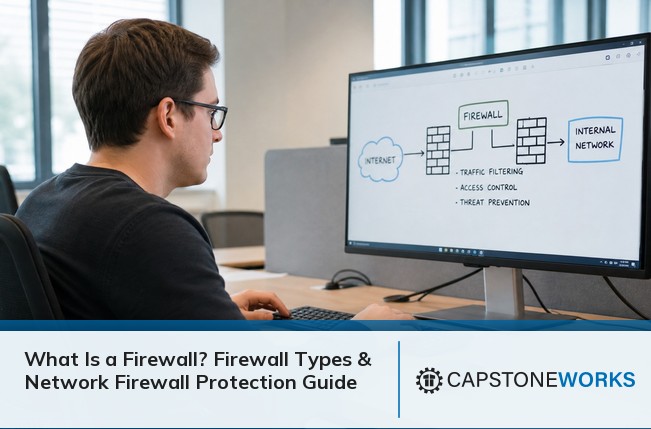
Learn what is a firewall and how firewall configuration protects your business. Discover types, features, and deployment tips for strong network security.
View More


.svg)


