


Discover cybersecurity for manufacturing and how to address manufacturing cybersecurity threats. Learn practical steps to protect your operations and data.
View More
Switching MSP IT companies for a lower price often leaves your business exposed, as the new provider needs time to fully understand your systems. The savings can be wiped out by slower responses and weaker security during this transition window.
It's widely assumed that switching to one of the top MSP companies is simply a matter of comparing rates and support packages. In practice, the transition itself carries a hidden risk that most businesses never budget for.
When you change providers, the new MSP starts from scratch in learning your systems, applications, and security setup. That reset can quietly weaken your IT defenses and slow down response times, no matter how attractive the new contract's rates look on paper.
So the price tag is rarely where the real cost shows up — it surfaces instead in lost productivity or gaps in cybersecurity coverage. Because the initial period after a switch is when your business is most exposed, and it's a risk that's rarely discussed up front.
Understanding how this transition period works, and what it means for your operations, can help you make a smarter decision when considering a new managed service provider.

Moving from one managed service provider to another is supposed to be a smooth handoff, but in reality the process rarely works that way. Each provider uses different tools, processes, and documentation methods, so even with detailed records on hand, the new team still has to learn your network, devices, and business workflows from the ground up.
That learning curve takes time, and during it the new MSP may not spot unusual activity or subtle issues as quickly as your old provider could. Lacking the same context or history with your systems, small problems can go unnoticed while response times lag what you're used to.
Security is especially vulnerable in this stretch, since the new provider might not yet recognize what normal traffic looks like for your business, which makes early threats harder to catch. If your business in Cedar Park relies on specific compliance or security requirements, these can be missed or misapplied until the new MSP fully understands your environment.
The transition phase is where the risk lives — not in the contract, but in the time it takes for your new partner to get up to speed.
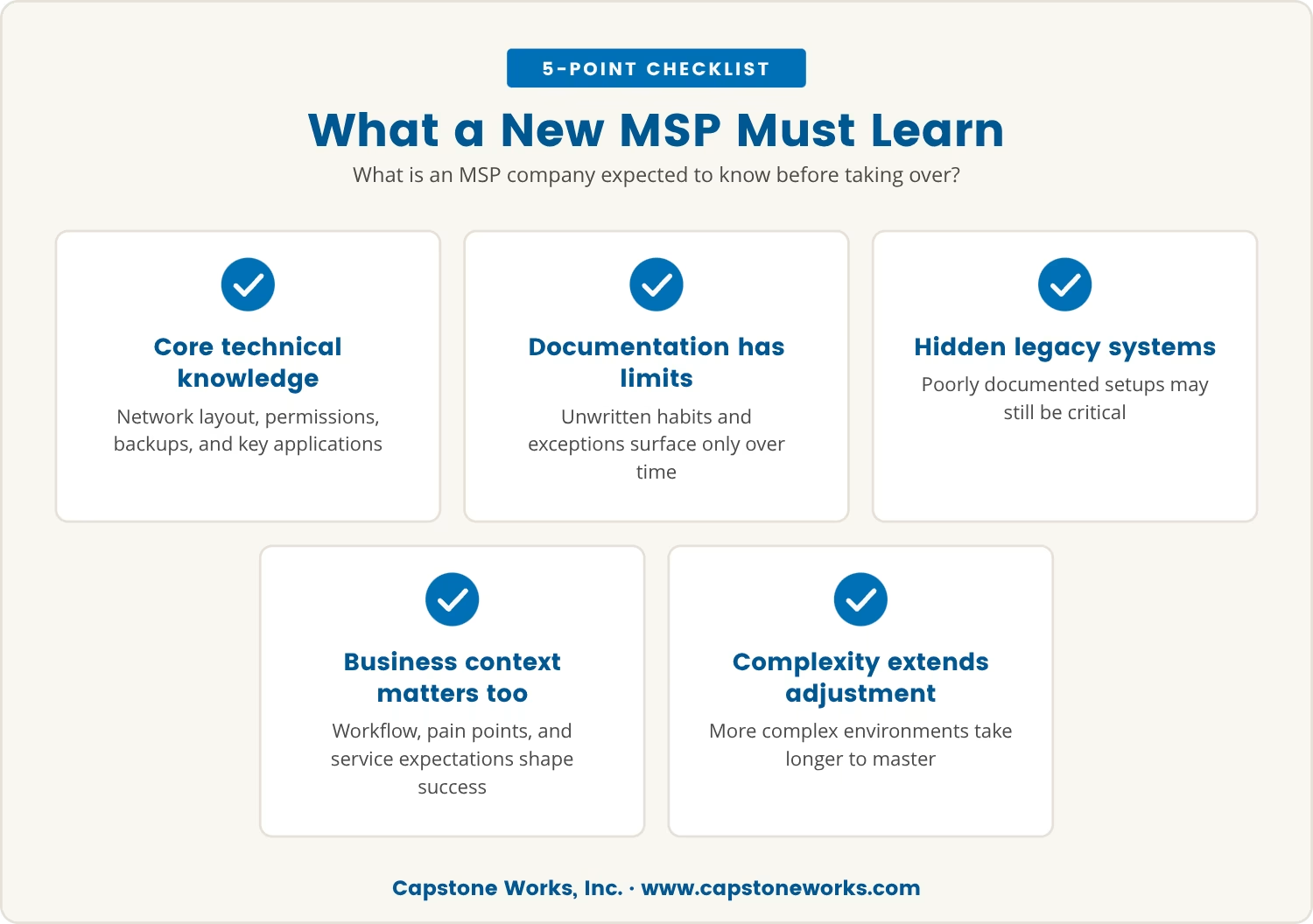
A managed service provider is responsible for more than just keeping your computers running: it needs a deep understanding of your network layout, user permissions, backup routines, and the specific applications your team relies on every day.
Before taking over, the new MSP should review all existing documentation, though even the best records can't capture every detail — unwritten habits, exceptions, and unique setups tend to surface only over time. A custom integration or a legacy application, for instance, may be poorly documented yet critical to daily operations.
Beyond the technical layer, the new provider also has to learn your business goals and how technology supports them, which means understanding your workflow, your pain points, and your expectations for service. Without that context, even a technically skilled MSP can miss the mark.
A thorough onboarding process helps, but it can't eliminate the adjustment period. The more complex your IT environment, the longer it takes for a new provider to reach full effectiveness.
Choosing from the top MSP companies in Cedar Park means expecting high standards and reliable service. Even so, the best providers face the same challenge: a transition window during which they are still learning your systems.
During this period, your business is more vulnerable to issues like delayed support or incomplete security coverage, since the new MSP may not yet know which alerts are false positives and which signal real threats. It may also miss subtle signs of trouble that your previous provider would have caught immediately.
This window can stretch for weeks or even months, depending on the complexity of your environment and the quality of your documentation, and while the new MSP works to close the knowledge gap, your business has to operate with less protection than usual.
It's easy to overlook this risk when comparing providers, especially when price is the main focus. But the transition window is where hidden costs can add up — through downtime, lost productivity, or even security incidents.
Switching MSPs doesn't just change who answers your calls. It changes how quickly and accurately your IT issues are resolved, and how well your systems are protected, in several specific ways the transition period can affect your business:
The new provider may take longer to respond to tickets because it is unfamiliar with your network and systems. Every request requires extra investigation before it can even begin.
Without a history of past problems, the MSP might treat recurring issues as new, leading to repeated troubleshooting instead of permanent fixes.
Security tools may be reconfigured or replaced during onboarding, and that process can open short-term gaps where threats slip through unnoticed.
The new MSP may not have full visibility into all your devices or cloud services right away, which reduces its ability to spot problems early.
When something goes wrong, diagnosing and fixing it takes longer because the provider lacks detailed knowledge of your setup and business priorities.
If your business must meet specific regulations, the new MSP might miss important steps until it fully understands your compliance needs.
Switching MSPs doesn't have to mean accepting unnecessary risk, since there are concrete steps that protect your business during the transition.
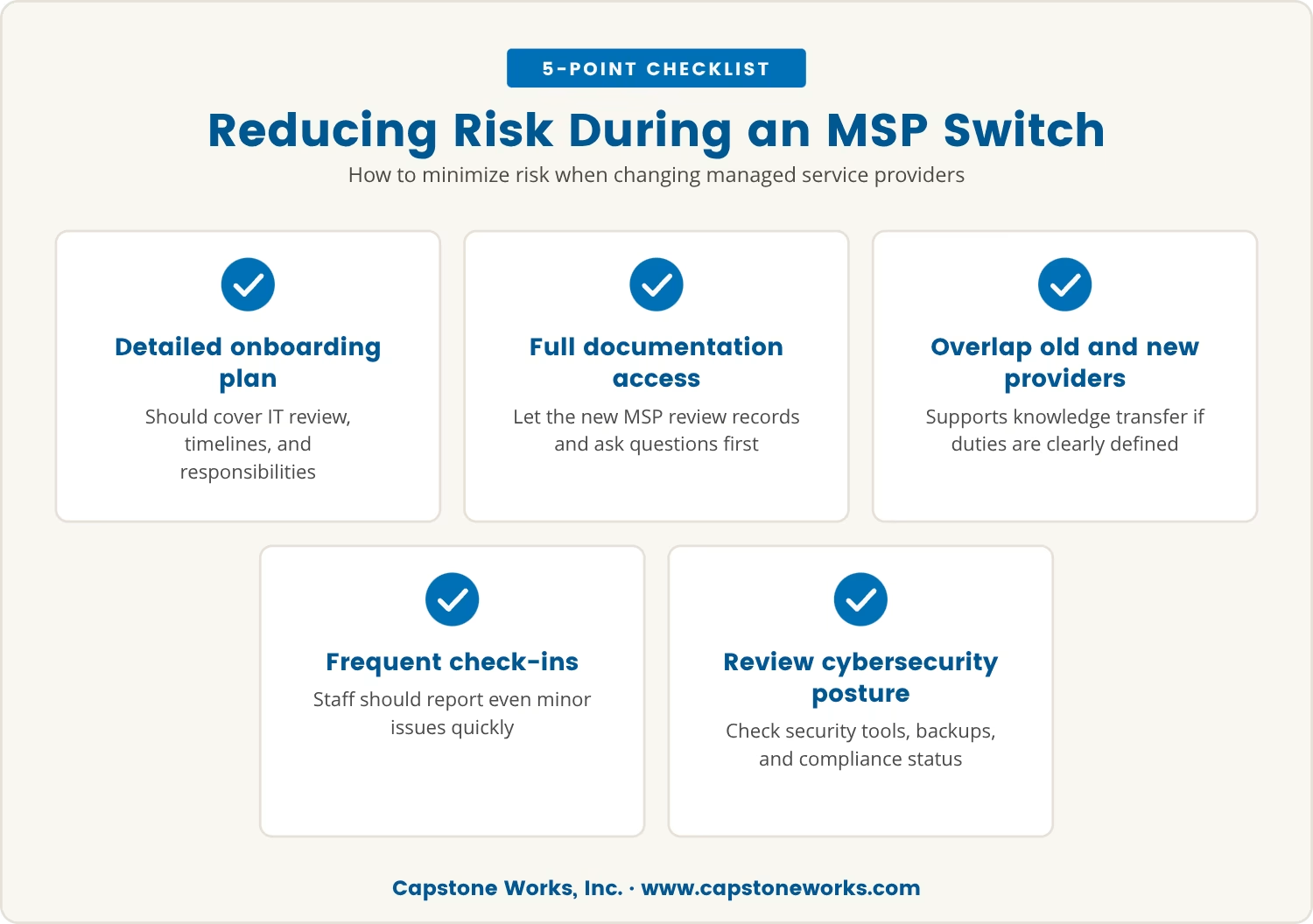
Start by insisting on a detailed onboarding plan that includes a comprehensive review of your current IT environment, clear timelines, and defined responsibilities for both your team and the new provider. Make sure the new MSP has access to all relevant documentation and the chance to ask questions before taking over.
It also helps to overlap your old and new providers for a short period, which allows for knowledge transfer and reduces the chance of missing important details — though responsibilities during that overlap need to be spelled out clearly to avoid confusion.
Regular communication matters just as much: schedule frequent check-ins with the new MSP to address issues as they arise, and encourage your staff to report problems quickly, even minor ones, so the provider learns your environment faster.
Finally, review your cybersecurity posture during the transition. Confirm that all security tools are active and properly configured, that backups are running as expected, and, if your business handles sensitive data, that compliance requirements are still being met.
Many businesses switch providers to save money, yet those savings can be offset by hidden costs during the transition. Downtime, lost productivity, and security incidents add up quickly, sometimes costing more than the gap between contract rates.
That risk peaks during the window when your new MSP is still learning your systems, which is precisely when problems are most likely to slip through the cracks. A lower rate looks appealing on paper, but it rarely accounts for the potential impact of a poorly managed transition.
Before making a switch, ask yourself: have you budgeted for the time and resources needed to support a new provider as it gets up to speed? The answer can make the difference between a smooth transition and costly setbacks.
The period after switching MSPs is when your business is most exposed to IT risks, which is exactly why planning for this window isn't just about avoiding problems — it's about protecting your operations and reputation.
By understanding the hidden consequences of a provider change, you can make better decisions for your business. The transition window is a real cost, and it deserves as much attention as the contract terms or monthly rate.

If your business has 25 to 75 employees, you know that changing IT partners can feel risky, especially when your systems are critical to daily operations. At Capstone Works, Inc., we understand how much is at stake during a transition and what it takes to keep your business running smoothly.
We invite you to see how our approach to onboarding and risk management can help you avoid the hidden costs of switching MSPs. Let’s talk about your current setup and how we can make your next transition safer.
If you’re not satisfied with Capstone Works, Inc. after 60 days, we’ll refund 100% of your fees—giving you a safety net while you make the switch.
Start by informing your staff about the upcoming change and what to expect. Encourage them to document any unique processes or recurring issues they encounter, which helps the new provider learn your environment faster and reduces the chance of missed details.
Response times may be slower as the new provider learns your systems, and you might need to supply extra information or context for support requests. Clear communication with the help desk team speeds up the adjustment process.
In many cases, existing cybersecurity tools can stay in place, though the new provider may recommend changes to better fit its management approach. Discussing preferences and requirements up front helps avoid gaps in protection.
Monitor your systems closely during the switch and report any increased outages or slower performance to your new provider right away. Keeping track of incidents helps both you and the MSP address problems quickly.
Build a detailed inventory of all hardware, software, and network configurations, including user permissions, backup schedules, and any custom setups. The more complete that documentation, the smoother the transition to a new managed service provider will be.


Discover cybersecurity for manufacturing and how to address manufacturing cybersecurity threats. Learn practical steps to protect your operations and data.
View More
Learn about remote monitoring and management, RMM meaning, and how the right solution boosts security, reduces downtime, and streamlines IT for your business.
View More


.svg)


