


Discover cybersecurity for manufacturing and how to address manufacturing cybersecurity threats. Learn practical steps to protect your operations and data.
View More
Managed SIEM solutions are becoming essential for businesses that want to stay ahead of cyber threats without overwhelming their internal teams. These services help you collect, analyze, and respond to security events using centralized tools and expert support. In this blog, we’ll explain what managed SIEM is, how it works, and why it’s a smart move for growing businesses. You’ll also learn about deployment options, key benefits, and how to avoid common mistakes.
We’ll cover topics like log management, threat intelligence, alert fatigue, and compliance reporting. Whether you’re managing a firewall or trying to reduce false positives, this guide will help you understand how to simplify your security operations.
Managed SIEM solutions are outsourced services that monitor and manage your security information and event management (SIEM) system. Instead of handling everything in-house, you work with a provider who takes care of setup, monitoring, threat detection, and response. This helps you manage security more efficiently and reduces the burden on your internal IT team.
A managed SIEM provider uses a combination of tools and expertise to collect log data from across your network—servers, endpoints, firewalls, and more. They analyze this data to detect threats, reduce false positives, and respond to incidents quickly. These services often include compliance support, reporting, and 24/7 monitoring through a Security Operations Center (SOC).
For businesses with limited resources, managed SIEM offers a cost-effective way to get enterprise-level protection without hiring a full security team.
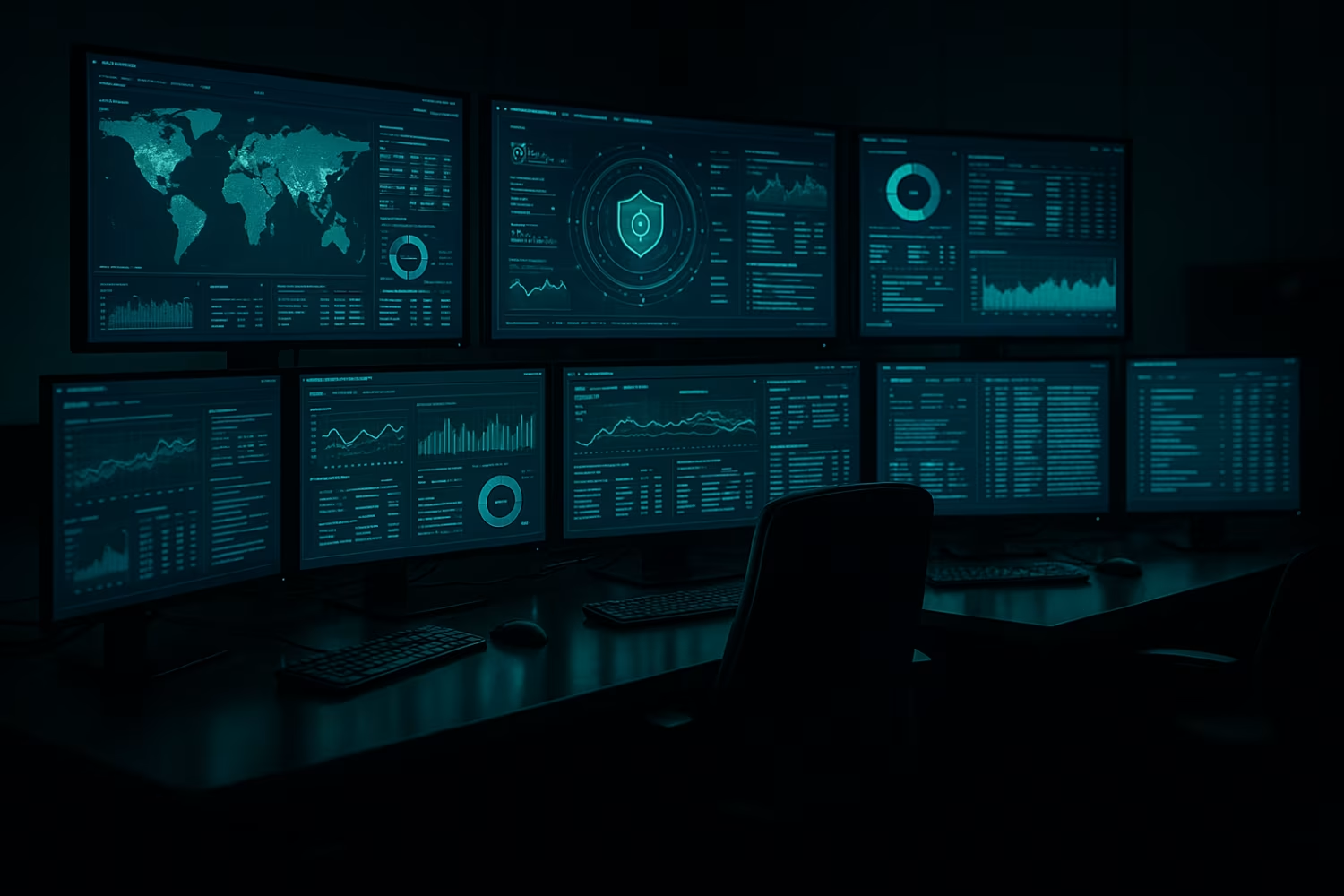
Selecting the right managed SIEM provider is a critical decision. Here are some common mistakes that can cost you time, money, and security.
Your SIEM solution should work with your current IT environment. If it doesn’t integrate with your servers, endpoints, or cloud services, you’ll miss important data sources. Always confirm compatibility before signing a contract.
Different industries have different compliance needs. A provider should offer features like compliance reporting and audit-ready logs. If they don’t, you risk falling short of regulatory standards.
Low-cost providers may cut corners on threat detection or incident response. Look for value, not just price. A reliable provider should offer strong detection and response capabilities, not just basic log collection.
Too many alerts can overwhelm your team. Ask how the provider filters alerts and reduces false positives. A good system should automate responses and prioritize real threats.
As your business grows, your SIEM needs will change. Make sure the provider can scale with you, whether you add new users, locations, or data sources.
SLAs define response times and responsibilities. Without them, you have no guarantees. Always review the SLA to understand what support you’re getting.
Managed SIEM solutions offer several advantages for growing businesses:

One of the biggest advantages of managed SIEM is improved threat detection. These systems use advanced analytics and correlation to identify suspicious behavior across your network. By centralizing log data from multiple sources, they provide better visibility into potential threats.
Managed SIEM providers also use machine learning to detect patterns and reduce false positives. This means your team spends less time chasing down harmless alerts and more time focusing on real issues. In many cases, detection and response can be automated to stop threats before they spread.
With access to global threat intelligence, your provider can identify new attack methods quickly. This helps you stay ahead of cybercriminals and protect sensitive data.
Not all SIEM tools are created equal. Here are the features that matter most when evaluating your options.
A strong SIEM tool should collect and analyze logs in real time. This helps you detect threats as they happen, not hours later. Look for systems that support log retention and easy search functions.
Threat intelligence helps your SIEM system recognize known attack patterns. This allows for faster detection and more accurate alerts.
Automation reduces the time between detection and response. Look for systems that can isolate endpoints, block IPs, or trigger alerts without manual input.
If you operate in a regulated industry, compliance reporting is essential. Choose a solution that offers built-in templates and audit-ready logs.
Whether you’re on-premises or in the cloud, your SIEM should grow with you. Make sure it supports flexible deployment and can handle increased log data.
You need a clear view of your entire environment. A centralized dashboard helps you monitor alerts, track incidents, and manage security from one place.

Deploying a managed SIEM solution isn’t just about turning it on. You need a plan that includes setup, data source integration, and ongoing management. Start by identifying what systems and devices will feed data into the SIEM. This includes servers, endpoints, firewalls, and cloud platforms.
Next, work with your provider to define alert thresholds and response workflows. Make sure you understand how alerts are handled and what actions are automated. Finally, schedule regular reviews to adjust settings and improve performance over time.
A successful deployment also includes training your internal team. Even with a managed service, your staff should know how to use the dashboard, review alerts, and respond to incidents.
To get the most from your managed SIEM, follow these best practices:
Following these steps will help you get consistent value from your managed SIEM solution.
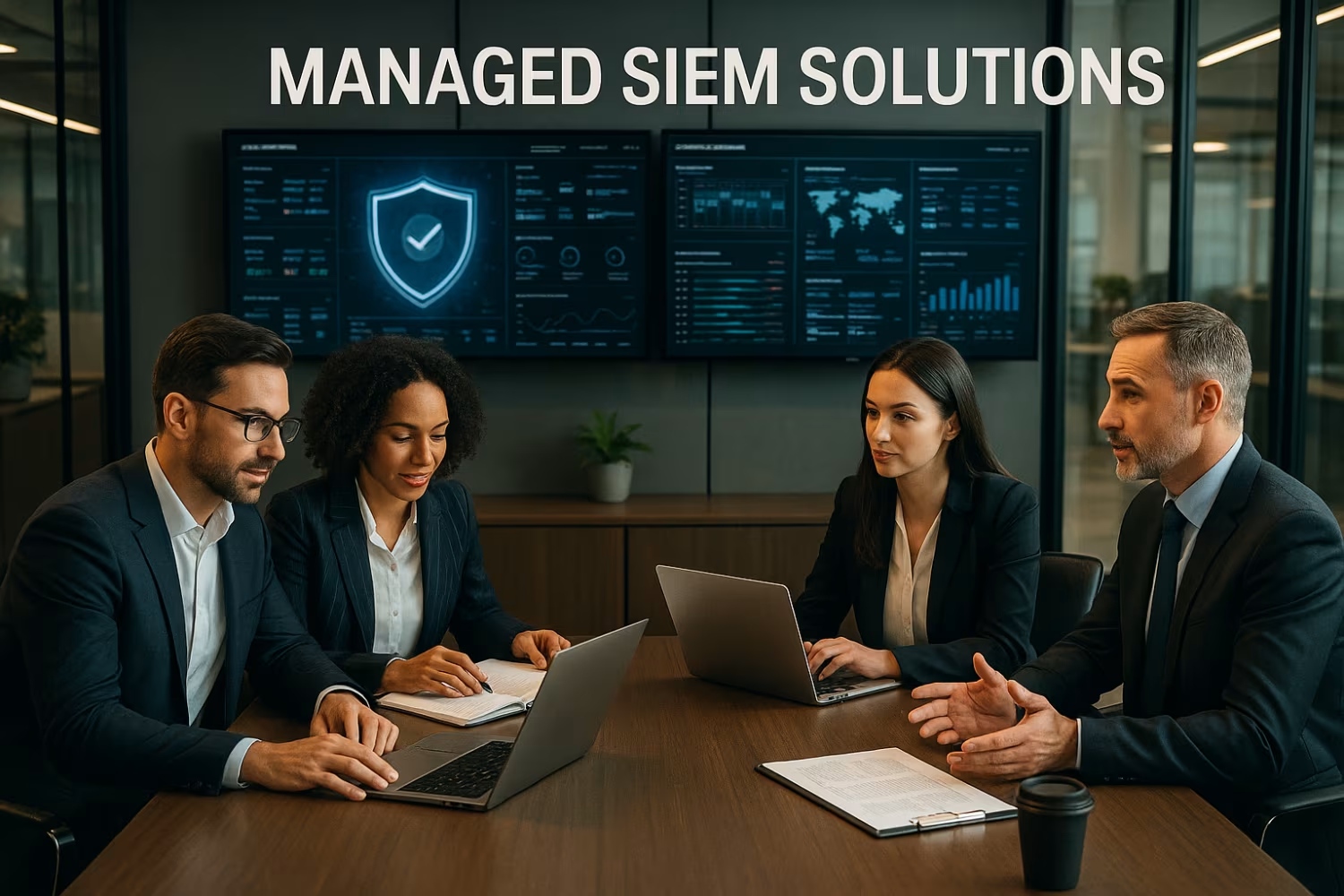
Are you a business with 25–75 employees looking for a better way to manage security? If you’re growing and need help with threat detection, compliance, or alert management, we can help. Our team works with companies like yours to simplify security operations and reduce risks.
At Capstone Works, Inc., we offer managed cybersecurity services that are tailored to your needs. We handle everything from deployment to ongoing monitoring, so you can focus on running your business. Contact us today to learn how we can support your security goals.
SIEM stands for Security Information and Event Management. It helps detect threats by collecting and analyzing log data from across your network. This includes data from servers, endpoints, and firewalls.
By using correlation and analytics, SIEM tools can identify unusual activity and generate alerts. This improves visibility and allows for faster incident response. Many systems also include automation features to reduce alert fatigue.
Managed SIEM providers use advanced threat intelligence and machine learning to fine-tune alert settings. This helps filter out harmless events and focus on real threats.
They also customize detection rules based on your environment. This reduces the number of false positives and ensures your team isn’t overwhelmed by unnecessary alerts.
Managed SIEM solutions often include built-in compliance reporting tools. These help you meet requirements for standards like HIPAA, PCI-DSS, or GDPR.
They also centralize log retention and automate audit preparation. This simplifies compliance tasks and reduces the risk of penalties.
A SIEM tool supports your Security Operations Center (SOC) by providing real-time visibility into security events. It collects data from multiple sources and uses analytics to detect threats.
It also helps automate detection and response, making your SOC more efficient. This allows your team to focus on high-priority incidents.
Yes, many managed SIEM solutions support on-premises deployment. This is useful for businesses with strict data control or regulatory needs.
Your provider can help you set up the system, centralize log data, and manage ongoing operations. On-premises setups still benefit from external expertise and 24/7 monitoring.
Common use cases include threat hunting, compliance reporting, and incident response. Managed SIEM services are also used to detect advanced threats and reduce alert fatigue.
They help simplify security operations by automating tasks and providing expert support. This makes them ideal for businesses without a full-time security team.

Discover cybersecurity for manufacturing and how to address manufacturing cybersecurity threats. Learn practical steps to protect your operations and data.
View More
Learn about remote monitoring and management, RMM meaning, and how the right solution boosts security, reduces downtime, and streamlines IT for your business.
View More


.svg)


