


Discover the overlooked risks when changing top MSP companies. Understand how the transition period can impact your IT security and productivity.
View More
Keeping help desk support in-house can actually create more gaps in coverage than outsourcing. The control you think you have may leave your staff and customers unsupported when they need help most.
Picture this: it's 11 p.m. on a Saturday, a critical system goes down, and the only person who knows how to fix it is on vacation with no signal. Every hour it stays broken costs real money and real trust.
That scenario is exactly where an in-house help desk tends to break down, no matter how capable the team is during business hours. The benefits of IT outsourcing are usually framed around cost savings and access to expertise, yet the quieter advantage is what happens when the clock runs past 5 p.m.: outsourcing closes the coverage gaps that internal teams simply aren't built to fill. That matters most for companies that need dependable support for both staff and customers, not just during the day but whenever something breaks.
Since so much of modern business depends on fast responses, the limits of an internal team show up fastest in the hours nobody planned for. In-house staff work set schedules, and stretching that coverage further usually means asking someone to be on call nights and weekends. Outsourcing providers are built differently from the ground up, with coverage designed to answer exactly when it's needed.

Most companies assume an internal team will be there the moment something goes wrong. In practice, most in-house teams keep standard business hours, so when someone is sick, on vacation, or simply off the clock, support slows down or disappears entirely.
That means a problem that hits after hours or over a holiday can sit untouched until the next business day. Rotating shifts help, but smaller teams still struggle to cover every hour without burning out employees or stretching resources too thin.
The outcome is a kind of irony: the control a business thinks it's protecting by keeping support in-house often shows up instead as recurring coverage gaps, and those gaps frustrate users and slow the business down.
Where an internal team runs out of hours, outsourcing help desk services changes the math entirely. Providers build their operations around round-the-clock coverage, using larger teams and specialized systems so someone is always on hand to respond, whatever time the issue surfaces.
For businesses in Cedar Park, that shift can be substantial. Rather than puzzling over who's on call or how weekends get covered, a business can lean on its outsourcing partner to keep things running without interruption.
That same infrastructure also flexes with demand: providers can scale up or down as a business grows or faces a sudden spike in requests, something a small internal team has a much harder time doing on short notice.
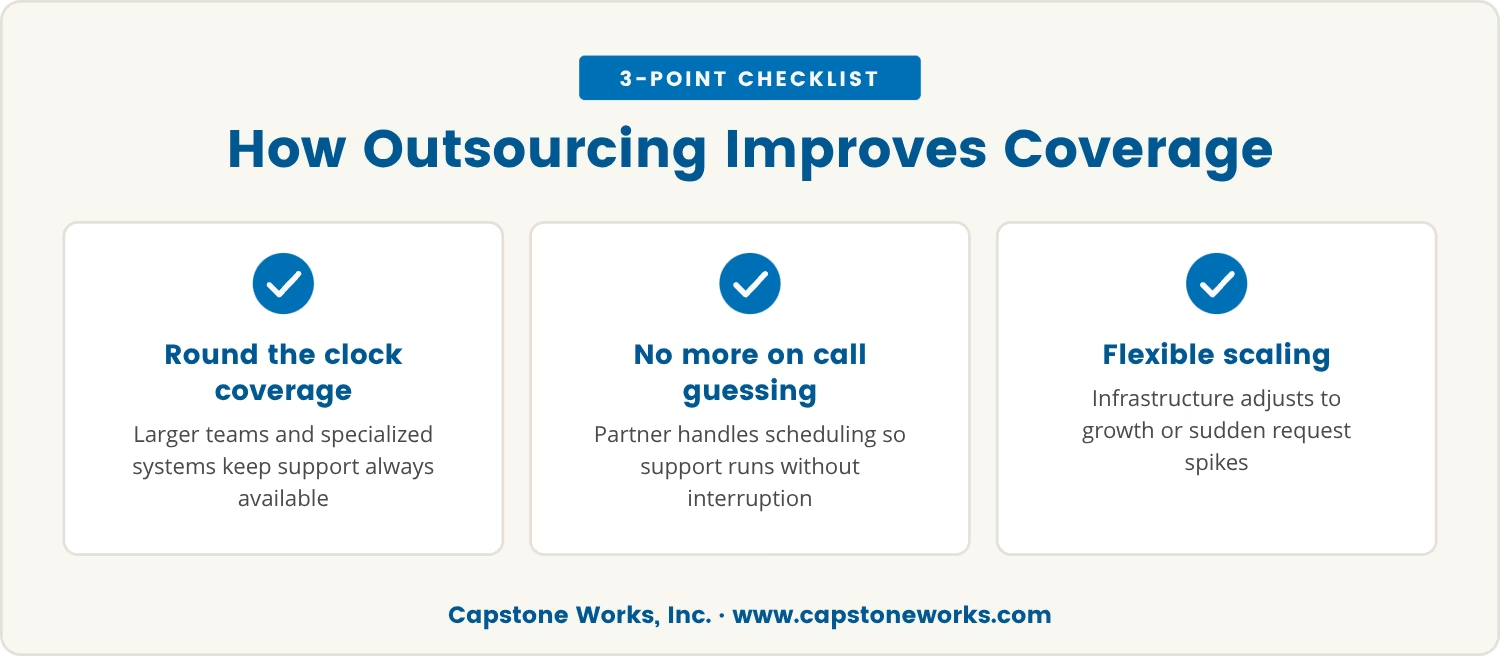
Following that thread of flexibility, consistent support is where the benefits of IT outsourcing become most concrete. Here's how outsourcing addresses the most common coverage challenges:
Outsourcing providers offer support beyond the typical 9-to-5 schedule. Staff and customers can get help whenever they need it, not only during business hours.
A dedicated team focused on help desk outsourcing tends to deliver faster, more predictable response times than an in-house team can match.
Outsourcing opens the door to IT professionals with a wide range of skills, including the kind needed for complex issues that fall outside an internal team's usual experience.
Internal teams covering after-hours support can quickly become overworked, while outsourcing spreads that same workload across a larger group, easing stress and turnover.
If a key staff member leaves or is unavailable, an outsourcing provider keeps support running without interruption.
As a business grows, outsourcing partners add resources quickly, which means no cycle of hiring and training new staff every time needs shift.
Outsourcing pricing models lay out what to expect in the budget ahead of time, which makes planning easier and keeps surprise expenses off the table.
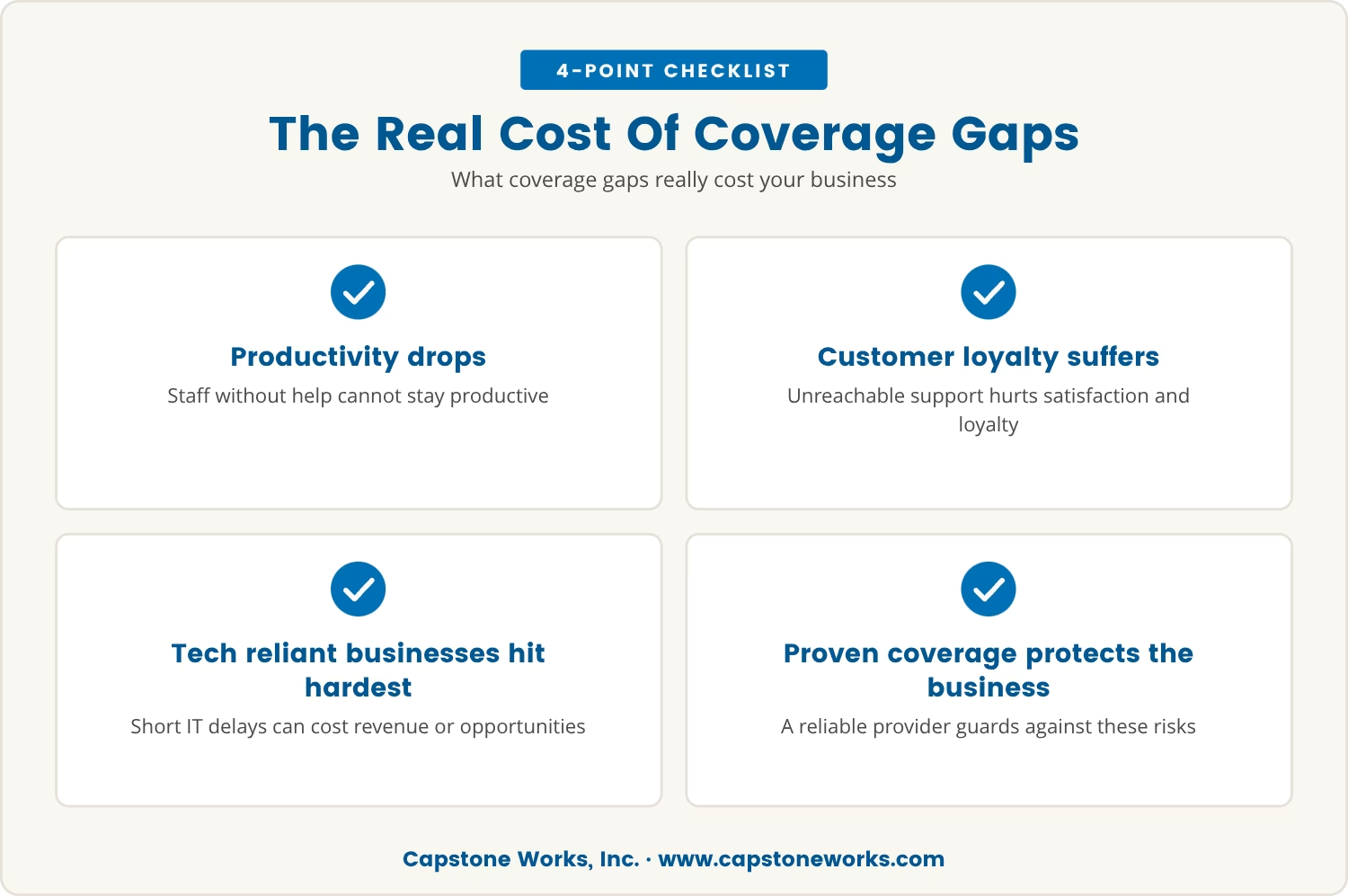
Building on that cost predictability, it's worth asking what unpredictability costs when coverage fails. Coverage gaps don't just slow support down; they ripple into the business itself. When staff can't get help, productivity drops, and when customers can't reach support, satisfaction and loyalty take the hit.
These problems bite hardest at businesses that lean on technology to serve clients or run operations, where even a short delay in resolving an IT issue can mean lost revenue or a missed opportunity.
Working with a provider that has proven support coverage protects a business from exactly those risks. The value isn't just faster fixes, it's a business that keeps running smoothly no matter what happens.
Given those stakes, the next step is sizing up what's currently in place. Start by asking: when was the last time a support request went unanswered after hours? If that's happened more than once, it's a sign the current setup may not be enough.
From there, check the support logs and talk to staff. Recurring complaints about slow response times or unavailable help are red flags that the internal team is stretched too thin.
Comparing current support hours and response times against what an outsourcing provider offers makes the gaps easier to see; and once they're visible, deciding whether a change is needed gets a lot simpler.
Once those gaps are clear, the local context explains why closing them matters so much. The Cedar Park business environment is competitive and fast-moving, and reliable IT support is part of what keeps a company in step with it. Outsourcing IT services brings the flexibility and coverage needed without the headaches of managing everything internally.
Working with an outsourcing provider also frees up attention for the core business, since support coverage is handled elsewhere. That shift lets internal resources go toward more strategic work and keeps the business agile.
Looking past the surface, keeping help desk support in-house often creates more problems than it solves. Outsourcing doesn't just bring cost savings or access to expertise; it delivers the consistent, reliable coverage staff and customers expect as a baseline.
For a business aiming to avoid support gaps and keep operations running smoothly, outsourcing is often the stronger choice. The control gained by staying in-house may, in practice, be costing more than it appears to.

Many businesses with 25 to 75 employees find themselves stretched thin trying to provide reliable help desk coverage at all hours. At Capstone Works, Inc., we understand how hard it is to balance control with the need for dependable support.
If you’re ready to see how we approach this challenge, let’s talk about your current setup and what true coverage could look like for your team.
If you’re not satisfied after 60 days, we’ll refund 100% of your fees—so you can experience our support with total confidence.
If an internal team struggles to cover all shifts or response times keep slipping, it may be time to consider outsourcing. Businesses often make the switch when growth or changing needs make reliable support hard to maintain with current staff.
Look for a provider with a proven track record, clear communication, and the ability to scale support as the business grows. It also helps to choose a partner that understands the relevant industry and can offer specialized expertise.
Some businesses worry about losing direct control or having less personal interaction with support staff. Many outsourcing partners address this by working closely with clients to keep communication smooth and integration tight with existing processes.
Outsourcing provides backup and redundancy, so support doesn't stop when a key staff member is unavailable. That keeps operations running even through unexpected events or staff changes.
Yes, outsourcing suits businesses with remote or hybrid teams well. Providers can offer support across different locations and time zones, which keeps everyone connected and productive regardless of where they're working.

%2520(1).avif)
Discover the overlooked risks when changing top MSP companies. Understand how the transition period can impact your IT security and productivity.
View More

Discover cybersecurity for manufacturing and how to address manufacturing cybersecurity threats. Learn practical steps to protect your operations and data.
View More


.svg)


